
Reflexive Pronouns

Reflexive Pronouns

English reflexive pronouns end in -self' or -selves and are used when the subject of the verb and the direct object of the verb are the same person. For example, in the sentence 'Jane bought herself a new coat' the reflexive pronoun 'herself' refers back to Jane'.

The singular reflexive pronouns are: myself, yourself, himself, herself, itself.
The plural reflexive pronouns are: ourselves, yourselves, themselves.


In the sentences below, the reflexive pronouns match the subject of the verb.

  • I cut myself on a broken glass.
  • Be careful with the knife or you'll hurt yourself.
  • He prepared himself for the bad news.
  • We shouldn't blame ourselves.
  • They are trained to defend themselves.
We use reflexive pronouns when we want to emphasize the person or thing already mentioned.

  • I told him myself.
  • Do it yourself!

We use reflexive pronouns with the proposition by when we do something alone or without help.
See also: How to use the preposition by

  • He lives by himself.
  • I managed to repair the television by myself.

We do not use reflexive pronouns after certain verbs.
  • He washed [himself] before going out.
  • They hid [myself] in my room.
  • She was feeling [herself] guilty.

After prepositions of place, we usually use personal pronouns.

  • We put the bag next to her [herself].
  • Can I bring a friend with me [myself]?

See also:
Personal Pronouns
Possessive Pronouns
Interrogative Pronouns
Indefinite Pronouns
Demonstrative Pronouns
Comments

Popular posts from this blog

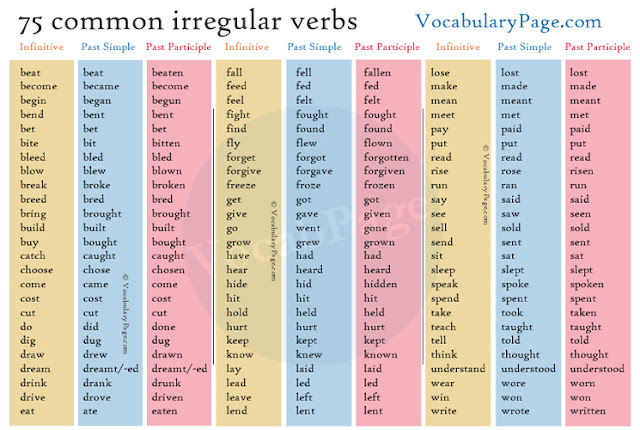
List of irregular verbs

In English, verbs can be regular or irregular .   

Colors in English

'What's your  favorite   color ?', 'What  color  are your eyes?' or 'What  color  is the car?' - these are the most common questions about  color  in English.  If you know the names of the  colors  in English, you will answer those questions .   Here is the list of the most common  colors :  

Gramer Nedir?

Gramer, bir dilin sistemidir. İnsanlar grameri genellikle bir dilin “kuralları” olarak tanımlar; fakat aslında hiçbir dilin önceden yazılmış katı kuralları yoktur. Eğer "kural" kelimesini kullanırsak, sanki önce biri bu kuralları yazmış, sonra insanlar bu kurallara göre konuşmaya başlamış gibi olur. Oysa diller böyle ortaya çıkmamıştır. Diller, insanların çeşitli sesler çıkarmasıyla başlamış ve bu sesler zamanla kelimelere, kelimeler de ifadelere ve cümlelere dönüşmüştür. Günümüzde konuşulan hiçbir dil sabit değildir; zamanla değişir ve gelişir. İşte “gramer” dediğimiz şey de, bir dilin belirli bir zamandaki yapısını ve düzenini yansıtan bir sistemdir. Dil Öğrenmek İçin Gramer Şart mı? Kısa cevap: Hayır. Dünyadaki milyonlarca insan, kendi ana dilini hiç gramer çalışmadan konuşabilir. Çocuklar da daha "gramer" kelimesini bile duymadan konuşmaya başlarlar. Ama uzun cevap: Evet, gramer öğrenmek sana yabancı bir dili daha hızlı ve daha etkili öğrenme imkânı sunar. Gr...