
Phrasal verbs with Kick


Here is a list of phrasal verbs with Kick

Kick around

1. Informal. to move from one place to another:
  • We decided to kick around Italy.
2. Informal. to discuss an idea or plan informally:
  • They met to kick the suggestion around.
3. Informal. to treat someone unkindly and unfairly:
  • He can't kick me around anymore.

Kick against

to react strongly against something that you dislike:
  • Students kicked against the establishment.

Kick back

American English. Informal. to relax:
  • Kick back and enjoy the movie.

Kick in 

1. Informal. to start or to begin to become effective:
  • The medication is kicking in.
2. Both American English. Informal. to give something, especially money, to help:
  • I kicked in a few dollars to the collection.

Kick off

1. When a football game kicks off, the players start it by kicking the ball:
  • What time does the match kick off?
2. Informal. to start or to start something:
  • The beer festival kicks off this week.
3. (S) to remove your shoes by shaking your feet:
  • He kicked off his shoes and collapsed on the sofa.

Kick out

(S) to force someone to leave a place:
  • I kicked him out of my house.

Kick up

1. If wind or a storm kicks up, it becomes stronger:
  • The wind started to kick up again.
2. to make something rise into the air:
  • The vehicles kicked up clouds of dust and rocks.
Comments

Popular posts from this blog

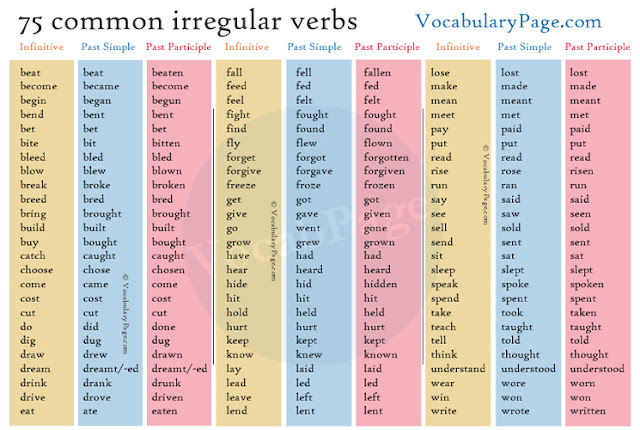
List of irregular verbs

In English, verbs can be regular or irregular .   

Colors in English

'What's your  favorite   color ?', 'What  color  are your eyes?' or 'What  color  is the car?' - these are the most common questions about  color  in English.  If you know the names of the  colors  in English, you will answer those questions .   Here is the list of the most common  colors :  

Gender-specific nouns

In many languages, the gender of nouns is divided into three categories; masculine, feminine and neuter. Male people and animals belong to the masculine gender (e.g. boy, son, or uncle) and female people and animals belong to the feminine gender (e.g. girl, daughter, or aunt).